
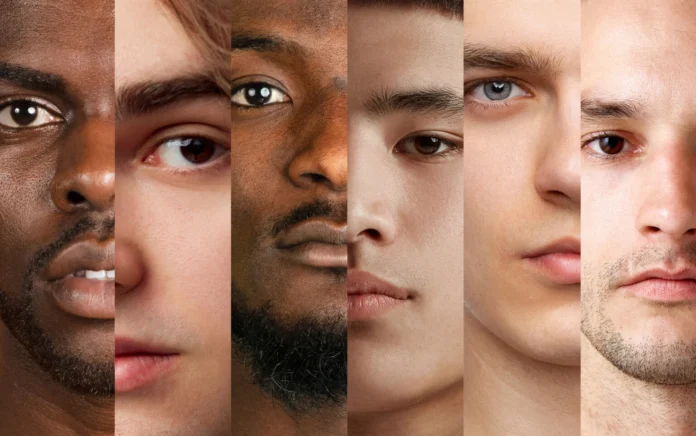
As a child, my mother often painted my fingernails and sent me to school with glossy lips and delicately perfumed hands. This early experience set me on a complex and sometimes confusing path to understanding my gender identity—a journey through the often jagged terrain of sexual nonconformity.
Sociologists differentiate between sex and gender: sex is biological, while gender refers to the social expectations assigned to individuals based on their sex. Yet today, conversations around sexual and gender identity often become battlegrounds filled with rigid labels—gay, straight, queer, transgender, tough guy, snowflake—that outsiders use to categorize and, sometimes, to judge. Society tends to reduce masculinity and femininity to neat binaries: a man labeled gay is presumed feminine; a straight man, masculine. But reality, as many know from personal experience, is far more complex.
I recall the anxiety I felt when I chose to become a male nurse, entering a profession largely dominated by women. Would this choice cast doubt on my masculinity? Would others question my sexual identity? Many men in similar fields defy stereotypical gender norms and yet identify as heterosexual—demonstrating that professional roles and personal identity do not have to align with outdated social scripts.
Olympic figure skater Johnny Weir summed it up powerfully: “Masculinity is what you believe it to be. Masculinity and femininity are very old-fashioned concepts. A whole new generation refuses to be defined by sex, race, or sexual preference.”
Black men, in particular, often grapple with the heavy burden of traditional masculinity—the expectation to be unyieldingly strong and stoic. Donald “Childish Gambino” Glover once reflected on this, saying, “The idea that we must always be strong really presses us all down; it keeps us from growing.” This pressure to conform can stunt emotional growth and create isolation.
Sexual attraction itself is not simply a matter of physical desire. It intertwines with karma, aura, emotional connection, intellectual compatibility, spiritual resonance, and even socioeconomic factors. Labels attempt to capture this vast, multifaceted experience in neat boxes, but as former NFL player Roy Simmons explained in his memoir Out of Bounds, “Labels are for people trying to define me—that’s their problem.” Simmons, who came out as gay after a celebrated football career, described his sexuality as fluid and natural, unaffected by the limiting labels others tried to impose.
The pioneering research of Alfred Kinsey in the mid-20th century also challenges rigid categories. His Kinsey Scale rates sexual orientation along a continuum from exclusively heterosexual to exclusively homosexual, acknowledging that “the living world is a continuum in each and every one of its aspects.” Recognizing this continuum can help society move toward a deeper understanding of human sexuality beyond binary judgments.
Growing up in Haiti, I experienced firsthand how gender expectations shape identity. Compared to my cousin Bob, who embodied the stereotypical “hardcore” masculine traits—boisterous, athletic, tough—I was labeled “Temou” (soft core) for being quiet, sensitive, and less physically assertive. These Creole labels reflected pathological ideas about masculinity that shaped my early self-image, pressuring me to fit a narrow mold.
Why, I often wonder, are so many men afraid of embracing traits associated with femininity? After all, biologically, we all carry both male and female chromosomes. Sometimes female traits are more pronounced in males, and male traits in females. Growing up surrounded by strong women who embodied both nurturing and assertive qualities has deepened my respect for femininity. Yet qualities like empathy, emotional openness, and vulnerability—so common among women—are too often dismissed as weaknesses when exhibited by men.
It takes courage to be vulnerable. True strength lies not in invulnerability but in the willingness to expose one’s authentic self. Fear and insecurity drive the desire to appear invincible. I encourage men of all identities to claim their “gender-bending” rights and celebrate all facets of themselves.
Violence, historically tied to the archetype of masculinity, is actually a sign of weakness, not strength. The great writer Jorge Luis Borges said it best: “Violence is the last resort of the weak.” Today’s men are redefining manhood, rejecting caveman archetypes and embracing emotional expression. The rise of “househusbands” and “stay-at-home dads,” along with male public figures openly discussing therapy—like comedian Chris Rock—show society’s shifting norms.
Iconic leaders such as Gandhi, Nelson Mandela, and Dr. Martin Luther King Jr. demonstrated that true power comes through nonviolence and thoughtful response. It takes maturity to choose peace over aggression, reflection over reaction.
Ultimately, no one else has the authority to define your masculinity—only you do. Do not allow external expectations or outdated gender stereotypes to cage your spirit. Embrace your authentic self fully, beyond labels and social norms. As I say in my book You Are Enough: The Journey to Accepting Your Authentic Self, the journey to self-acceptance is the most courageous journey you will ever take.