
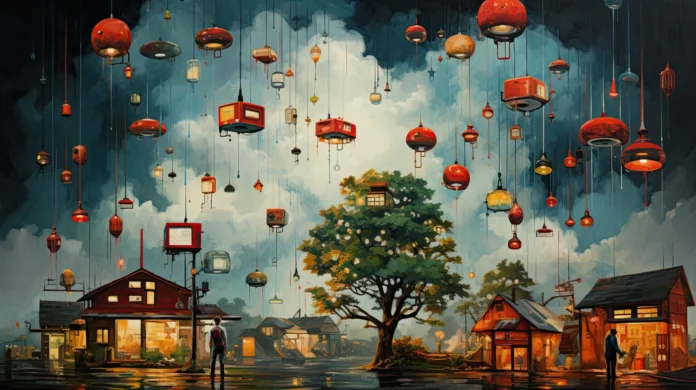
In our fast-changing world, dreams can be more than just private stories — they might be messages from our wider communities, acting like canaries in the coal mine, alerting us to shifts and challenges ahead. But how often do we stop to recognize that some dreams are not just about us, but about the “village” we belong to — our family, community, or even the world at large?
When Dreams Speak Beyond the Self
Imagine your life as the center of expanding circles — your closest relationships, your neighborhood, your nation, the planet. It makes sense that sometimes our dreams might reflect events or people beyond our personal lives, touching those wider circles.
Historical examples offer remarkable insights:
- Sophocles, the ancient Athenian poet, once dreamed repeatedly about a stolen gold vessel from the temple of Hermes, including who took it and where it was hidden. Acting on his dream, authorities recovered the sacred item. Though the dream came to Sophocles, it belonged to his community, guiding collective action.
- Harriet Tubman relied on vivid dreams and visions to navigate the Underground Railroad, leading enslaved people to freedom. Once, a dream revealed a safe river crossing and a hiding place, both critical for survival on the escape route.
- In 1993, a white buffalo was born in Wisconsin, an event considered sacred by many Native American tribes. Remarkably, visitors from North Dakota traveled hundreds of miles, guided only by nightly dreams that showed them which roads to take to reach the animal. This journey united people through a shared dream that transcended distance and time.
These stories come from cultures where dreams were sacred — considered gifts from a higher power or spirit, providing guidance for the whole community. Even Sophocles, who reportedly did not believe in dreams personally, belonged to a culture that honored their importance.
Dreams as Warnings and Guides
The famed psychiatrist Carl Jung experienced powerful dreams before World War I, visions of catastrophic floods and icy devastation across Europe. Initially interpreting these as personal nightmares or signs of mental illness, Jung only understood their collective significance when the war actually erupted. These dreams were messages about his “village” — the entire Western world on the brink of upheaval.
Author Meredith Sabini shares her own experience with such outward-facing dreams. She once dreamed of being on a large ship sailing through “bad air,” a metaphor that later corresponded to a wave of sexual misconduct scandals rocking her professional organization. Another dream of a tsunami approaching a graduate school foretold a major reorganization that would ripple through the student body.
How to Recognize a Dream from Your Village
Outward-facing dreams tend to share key qualities:
- Scope: They depict large-scale or collective events, not just personal situations. Jung’s dreams covered entire regions; Sabini’s involved whole institutions.
- Symbols: These dreams often involve vehicles like ships or natural disasters — metaphors for upheaval affecting many.
- Timing: Such dreams frequently appear during times of social, cultural, or political transition — moments when collective uncertainty and anxiety rise.
Recognizing these clues can help us interpret dreams not only as individual experiences but as communal signals.
Why We Need Dreamers Now More Than Ever
Today, as we navigate immense changes globally, we need dreamers who can sense what’s on the horizon and help communities prepare. Research after the 9/11 attacks revealed that many people had dreams about crashing planes and collapsing buildings in the weeks leading up to the tragedy, though the meaning wasn’t clear until after the event.
Dreams, then, might function like early-warning systems, offering glimpses of what’s to come — but only if we pay attention and share them openly.
The African proverb “It takes a village to raise a child” applies beautifully here. A dream, like a child, often needs the collective wisdom of a community to be understood fully and to grow into its potential. Our waking minds have limited capacity, but the dreaming mind — evolved over millennia — can perceive subtle shifts in our wider environment.
Building Communities of Dreamers
How do we honor these “village” dreams in modern times?
- Create forums and councils where dreams can be shared and explored, much like the ancient Aeropagus that Sophocles reported to.
- Encourage cultural respect for dreams, recognizing their potential as guidance beyond the personal.
- Support dreamwork practices that connect individuals’ insights with community needs.
By nurturing such collective dream interpretation, we strengthen our ability to face transitions with wisdom and resilience.
In Conclusion
Dreams have long served as bridges between the individual and the collective, carrying messages that can warn, guide, and inspire. From Sophocles to Harriet Tubman, from Jung to modern-day visionaries, the evidence is clear: understanding dreams often requires a village.
As we stand amidst global shifts, tuning into these shared dreams could be vital. They ask us not just to listen inwardly, but to reach outward — to share, interpret, and act together.
In doing so, we honor the ancient power of dreams and equip ourselves to meet the future with insight and hope.
Meredith Sabini, a licensed psychologist and dream consultant, encourages us to embrace the communal dimension of dreaming, reminding us that no dreamer stands alone.